How Humpback Whale Mothers Care for Their Calves in Samaná Bay
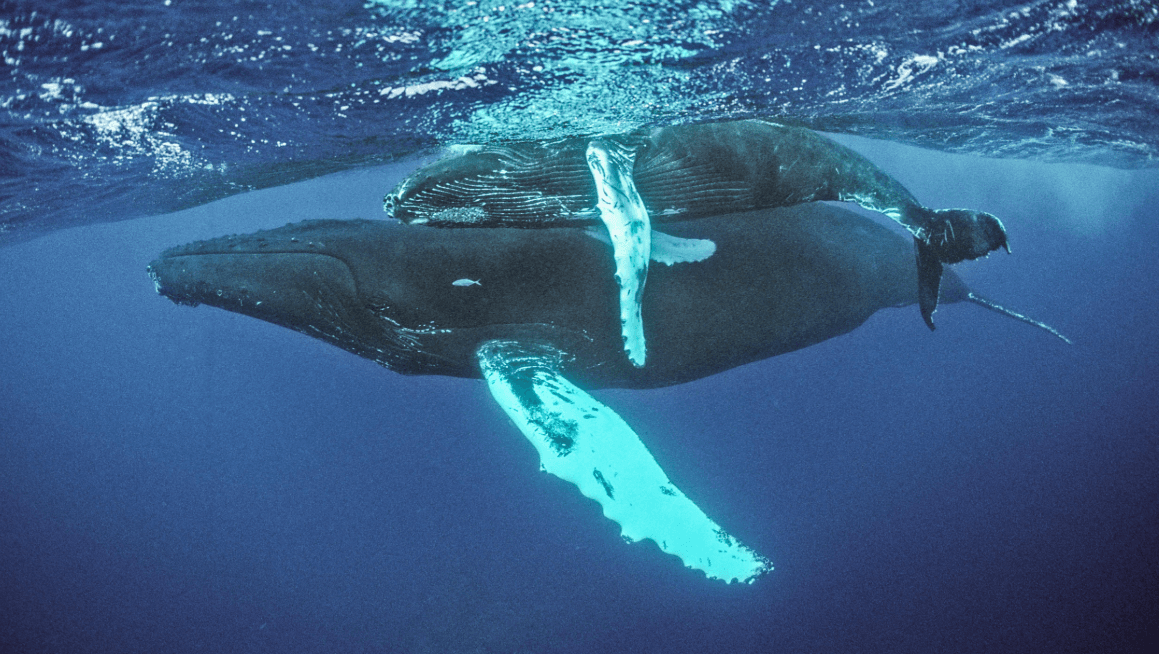
One of the most remarkable experiences during whale-watching season in Samaná Bay, Dominican Republic, is seeing a humpback whale mother traveling with her calf. These encounters offer a glimpse into the early life of one of the ocean's most fascinating marine mammals.
Humpback whale mothers have an important role during the first months of their calves' lives. They provide milk, remain close to their young, and help them navigate the marine environment while the calves develop the strength and abilities needed for independent life.
Samaná Bay is an important breeding and calving area for North Atlantic humpback whales during their seasonal migration. Although every encounter is different, visitors may sometimes observe mothers and calves traveling together near the surface.
In this guide, you will learn how humpback whale mothers care for their young, how calves feed, why close contact matters, and what responsible whale watchers should understand about these remarkable family relationships.
Why Do Humpback Whales Give Birth in Warm Tropical Waters?
North Atlantic humpback whales migrate between feeding areas at higher latitudes and warmer waters in the Caribbean. Samaná Bay is one of the places where they gather during the winter breeding season.
These tropical waters provide an important setting for mating, giving birth, and caring for young calves during their early weeks and months.
Adult humpback whales do not necessarily spend this entire period without feeding, but they commonly rely on energy reserves accumulated during feeding periods elsewhere. Newborn calves, meanwhile, depend on their mothers for nourishment.
Warm tropical waters are particularly relevant to young calves because they are born with less insulating blubber than adults. The warmer environment helps reduce the challenge of maintaining body temperature during their early life.
The presence of mothers and calves makes Samaná an important destination for visitors interested in observing the family life of humpback whales.
1. A Mother Provides Milk for Her Calf
One of the most important responsibilities of a humpback whale mother is feeding her calf.
Like other mammals, humpback whales produce milk to nourish their young. Whale milk is rich in fat and nutrients, allowing calves to obtain the energy needed for growth and development.
Because calves live in the ocean, nursing works differently from feeding in many land mammals. The mother has specialized mammary glands concealed within mammary slits, rather than exposed nipples like those of many terrestrial mammals.
A calf nurses underwater, taking milk from its mother's mammary area. The milk's high fat content makes it particularly energy-rich.
Why Is Nursing So Important?
During early life, a calf must grow while developing the physical abilities required to swim efficiently and travel with its mother.
Milk provides essential nourishment during this period. A calf that receives sufficient nutrition can gradually build body mass and energy reserves.
The mother therefore supports the calf through both direct nursing and the protection associated with remaining nearby.
Visitors on a whale-watching boat will not usually see nursing clearly. Much of this behavior occurs underwater, outside the view of observers at the surface.
2. Mothers Stay Close to Their Young
A young humpback whale cannot immediately navigate the ocean with the same experience and physical capabilities as an adult. Staying close to its mother helps the calf remain alongside an experienced whale while learning to move through its environment.
Mother-calf pairs are often observed traveling close together. Their positions can change as they surface, swim, and dive, but maintaining proximity is an important feature of early maternal care.
How Does Close Contact Help?
Remaining near its mother allows a calf to travel with an adult that has experience navigating the marine environment.
The mother also provides an important point of reference as the calf becomes accustomed to swimming, surfacing, and responding to the surrounding conditions.
Although researchers can observe these patterns, it is important not to assign a precise emotional meaning to every movement. A mother and calf swimming close together is consistent with maternal care, but a single observation cannot reveal everything the animals are experiencing.
3. Calves Must Learn to Swim Efficiently
Swimming is essential for a humpback whale calf. It must be able to remain near its mother, reach the surface to breathe, and keep pace during movement through the water.
A newborn calf can swim, but its physical abilities and endurance continue developing during early life.
Its mother provides an important example of how to travel through the ocean. By moving alongside an experienced adult, the calf spends its early months in a setting where it can develop its swimming abilities.
Why Is Swimming With the Mother Important?
The mother and calf need to travel together as they move through their environment. A calf that cannot maintain an appropriate swimming pace could struggle to remain close during longer movements.
Early development therefore involves more than simply becoming larger. It also includes improving coordination, endurance, and the ability to move through the water.
During a Samaná whale-watching excursion, visitors may notice a smaller whale surfacing close to a larger adult. Such an observation may be consistent with a mother-calf pair, although guides and trained observers are better placed to interpret the encounter.
4. Mothers Help Calves Navigate the Marine Environment
The ocean presents a complex environment for a young whale. Water conditions change, other marine animals may be nearby, and the animals must coordinate their movements while returning to the surface to breathe.
Traveling with its mother gives a calf the opportunity to remain alongside an experienced adult throughout these early challenges.
The mother's movements can help the pair maintain their course as they swim through the area. However, it would be inaccurate to claim that every movement is a deliberate lesson or that the mother consciously teaches every skill in the same way a human parent might.
The relationship is best understood through observable behavior: the mother and calf remain associated while the young whale develops and gains experience.
5. Mothers Support Calves During Their First Migration
Humpback whales are known for their long seasonal migrations between breeding and feeding grounds. For a calf born in the Caribbean, the journey toward northern feeding areas represents an important transition.
The calf must travel alongside its mother while continuing to develop its physical abilities and energy reserves.
The timing and route of migration can vary with conditions and individual circumstances. Nevertheless, the mother-calf relationship is central to the calf's early journey.
Why Is the First Migration Challenging?
The journey involves sustained swimming over long distances. A young calf must remain with its mother while adapting to changing ocean conditions and the demands of travel.
The mother's experience and continued care are especially important during this stage.
Samaná Bay offers an opportunity to learn about the beginning of this broader life journey, although a typical whale-watching trip will reveal only a brief portion of the animals' lives.
6. How Do Calves Breathe and Rest?
Humpback whale calves are mammals, so they must breathe air at the surface. They do not have gills and cannot remain underwater indefinitely.
A calf needs to coordinate surfacing with swimming and traveling alongside its mother. Its breathing patterns and diving abilities develop as it matures.
Rest is also important. Like other mammals, whales need periods of rest, but their sleeping behavior differs from that of humans. Cetaceans can rest while remaining capable of surfacing to breathe.
Researchers study cetacean sleep and resting patterns using different methods. A casual surface encounter generally cannot tell an observer whether a calf is sleeping, resting, or simply swimming slowly.
For visitors, the key point is that mothers and calves must balance movement, breathing, rest, and nursing during their time in tropical waters.
7. Communication Between Mothers and Calves
Humpback whales produce a variety of sounds, and sound is important in the underwater environment. Researchers continue to investigate how different sounds are used in different social contexts.
Mother-calf pairs may communicate acoustically, but not every sound heard or recorded can be assigned a definite meaning.
Sound travels effectively through water, making acoustic communication useful for marine mammals. However, the details of how individual mothers and calves use particular sounds remain an area of scientific investigation.
Can Visitors Hear Them Communicating?
A typical whale-watching trip does not necessarily provide an opportunity to hear underwater whale sounds. Boats are usually observing the animals from the surface, and the whales may be some distance away.
Specialized underwater listening equipment is needed to record many whale sounds clearly.
Even when sounds are recorded, interpreting their meaning requires careful scientific analysis. It is best to avoid claims that a particular sound definitely means a mother is calling her calf unless reliable evidence supports that interpretation.
8. What Challenges Do Mother Humpback Whales Face?
Caring for a calf requires energy and time. Mothers must support their young while navigating the marine environment and preparing for the eventual migration toward feeding grounds.
Humpback whales also face broader environmental and human-related pressures.
Potential threats include entanglement in fishing gear, collisions with vessels, underwater noise, and changes in marine ecosystems. The significance of each threat varies by location and circumstance.
For a mother with a calf, disturbance can be especially concerning because the pair needs space to travel and behave naturally.
Why Does Responsible Whale Watching Matter?
Responsible whale watching helps reduce unnecessary pressure on the animals.
Tour operators should follow applicable regulations and established wildlife-viewing guidance, including appropriate distances and approach procedures. Visitors should avoid encouraging boats to chase whales, cut across their paths, or approach closely to obtain photographs.
A respectful encounter allows observers to appreciate the animals without making a close interaction the goal.
9. What Can You Observe During Whale-Watching Season in Samaná?
Seeing a mother and calf is a special possibility during the breeding and calving season, but wildlife sightings can never be guaranteed.
If a pair appears during your excursion, you may notice:
- A smaller whale swimming close to a larger adult.
- The pair surfacing within a short period of one another.
- Both whales traveling in the same general direction.
- The smaller whale staying near the adult as they move through the water.
These observations may be consistent with a mother-calf pair, but size differences and proximity alone are not always enough to establish a relationship with certainty.
Listen to your guide's explanation and remember that you are observing only a small part of the animals' behavior.
Avoid expecting a particular display, such as nursing, playful movement, or close interaction. The animals decide how they move and behave, and every trip offers different viewing opportunities.
10. How to Observe Mother-and-Calf Pairs Respectfully
Seeing a young whale beside its mother can be an emotional experience. It is natural to want a closer look, but the welfare of the animals should remain the priority.
Follow the captain's and guide's instructions, remain within designated viewing areas, and do not ask the boat to move closer than permitted.
Use binoculars if they help you see details from a respectful distance. If you take photographs, do so without distracting yourself from safety instructions or pressuring the operator to change the vessel's position.
It is also important to keep expectations realistic. A mother and calf may swim quietly, disappear beneath the surface, or remain too far away for detailed observation.
Respecting their space is part of responsible wildlife tourism and helps preserve the value of whale-watching experiences in Samaná.
Frequently Asked Questions
How long does a humpback whale calf stay with its mother?
Humpback whale calves typically remain with their mothers for several months, including the early period of nursing and their first migration toward feeding grounds. The exact timing can vary.
What do humpback whale calves eat?
Young calves receive milk from their mothers. The milk is rich in fat and provides energy for growth. As the calf matures, its feeding needs and behavior change.
Do humpback whale mothers protect their calves?
Mothers remain closely associated with their young and provide nourishment and support during early life. Their proximity is an important feature of maternal care, although the details of each encounter vary.
Can visitors see a calf nursing in Samaná Bay?
Nursing usually takes place underwater, so it is unlikely to be clearly visible during a standard whale-watching excursion. Visitors may instead see a calf swimming or surfacing near its mother.
When can you see mother-and-calf pairs in Samaná?
Samaná Bay is an important breeding and calving area during the North Atlantic humpback whale migration season, which generally falls in winter and early spring. The presence of individual pairs varies, and sightings are never guaranteed.
Why should boats give mother-and-calf pairs space?
Giving whales space helps reduce disturbance and allows them to move naturally. Tour operators should follow applicable wildlife-viewing regulations and guidance, especially when observing young animals.
Final Thoughts
Humpback whale mothers play a vital role during the early lives of their calves. Through nursing, close association, and traveling together, mothers support their young as they develop the abilities needed for life in the ocean.
Samaná Bay offers visitors a chance to learn about this important stage in the humpback whale life cycle. Although a single excursion reveals only a small part of the relationship, even a brief observation can help people appreciate the care and challenges involved in raising a calf at sea.
The best way to experience these animals is with patience, realistic expectations, and respect for their space. By supporting responsible whale watching, visitors can enjoy the natural beauty of Samaná while helping protect the marine wildlife that makes the region so special.

Local explorer & expert guide in Glamping Los Haitises.